Keep, Display or Store: Choosing a Place for Sentimental Things
Choose where sentimental things belong by how often you enjoy them, with practical ways to keep a favourite visible, display it selectively or store it safely.
A chipped blue cup sits on the kitchen shelf, though nobody drinks from it. It belonged to your grandmother, and reaching for it still brings her to mind. For sentimental things, frequency of enjoyment can help decide whether to keep an item in daily view, display it occasionally or store it with care.
Keep an object in view when seeing it is part of the pleasure
Some belongings give something back each time your eye lands on them. A postcard from a friend may make a desk feel companionable; a small bowl inherited from a relative might be both beautiful and useful. If you notice the object with warmth rather than simply registering that it is there, an accessible place can make sense.
Daily view does not have to mean the centre of a shelf. Put the item where it suits its size, material and purpose: a framed photograph on a desk, a sturdy bowl on a sideboard, or a smooth keepsake in a shallow dish. Leave enough room around it that it remains distinct from the household’s general visual clutter.
Consider how the object behaves in that location. A fabric keepsake beside a sunny window may fade; a delicate ornament on a narrow ledge may be easy to knock. A place that lets you enjoy an item without making you fret over it is more useful than a prominent spot that feels precarious.
Put a frequently enjoyed object somewhere you naturally pause, not somewhere you must constantly protect.
Choose selective display when enjoyment comes in seasons
An object can matter deeply without needing to be visible every day. Perhaps you like bringing out a handmade decoration during a particular season, or looking through family photographs when relatives visit. Selective display gives these things a real place in home life while leaving ordinary surfaces available for other uses.
Choose a small, definite display area: a mantel, a cabinet shelf or the top of a bookcase. Group items that belong together, such as a few travel souvenirs from one journey, rather than scattering each piece around the room. The arrangement can change when your attention changes, without implying that the things removed have become less meaningful.
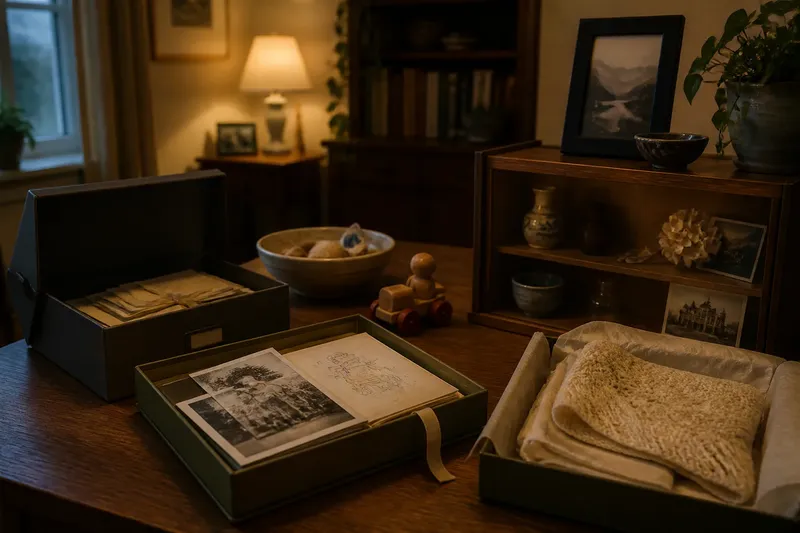
Store the rest of the group together so the display is easy to refresh. A labelled box, portfolio or album makes it clear what is inside and helps prevent one item from becoming separated from the others. Keep the display simple enough that you can still dust around it and use the surface for its ordinary purpose.
For a seasonal object, choose a display period that feels natural to you and return it to its storage place when that period passes.
Use careful storage when you value the object more than seeing it
Some things are precious because of their story, not because they are pleasant or practical to keep on show. A bundle of letters, a child’s first drawing or a delicate textile may be more reassuring in a protected place than exposed on a shelf. Storage is not a verdict on an object’s importance. It is a way to keep it available for a time when you want to revisit it.
Choose containers that suit the material. Paper can be kept flat in a folder or archival box. For textiles, avoid tight compression and do not assume that one folding method or tissue suits every fibre, dye or finish. If you know the material and it is robust, store it clean and loosely, with folds kept gentle; for a fragile, stained, brittle or historically important textile, seek material-specific advice from a qualified textile conservator before choosing tissue, folding or another method.
Avoid leaving sentimental items in damp areas, direct sunlight or places with large temperature swings. Keep containers easy enough to reach that revisiting them remains a real option. For ordinary keepsakes, a clean, dry and stable cupboard is often more considerate than a loft or garage where conditions can fluctuate.
Store an item where you can find it again, and make its location easy for another household member to understand.
How should you choose between display and storage?
What belongs in daily view?
Keep an item in daily view if you enjoy seeing it often and its location does not expose it to avoidable damage. A useful or attractive keepsake can earn its place on a desk, shelf or sideboard, provided it does not make the space awkward to use.
When is occasional display a better fit?
Choose selective display if your pleasure comes from bringing an object out at particular times rather than seeing it constantly. A defined display area and a nearby storage place make it straightforward to rotate items without spreading them throughout the home.
Should I store something I rarely look at?
Storage may suit an item you value but seldom want in sight, especially if it is fragile or vulnerable to light and dust. Keep it accessible and identifiable so you can choose to revisit it rather than treating the container as a permanent hiding place.
What if several people feel attached to it?
Ask the people who care about the object how they would like to enjoy it, then consider a shared arrangement such as rotating its display or keeping it in a place everyone can access. If views differ, agree on a location and revisit the choice when circumstances change.
Let the decision change with your attention
Where an object belongs need not be a once-and-for-all decision. Its story may become more vivid at one time and quieter at another. A photograph might move from a box to a shelf after a family conversation; a decorative plate might return to storage when a room is rearranged. The change says something about your present attention, not the object’s worth.
Say you have a small wooden toy from childhood that you enjoy showing visiting family, but rarely notice on an everyday shelf. You could place it in a labelled box with related photographs, then bring it out when guests ask about it. The expected result is a keepsake that remains easy to share without occupying a display spot you seldom appreciate.
When deciding where sentimental things belong, ask how often you genuinely enjoy them, then choose a place that supports that kind of enjoyment. Daily view suits frequent pleasure; selective display suits occasional attention; careful storage suits objects valued for their meaning or preservation. If the answer changes, move the object without treating the move as a judgement.