The Room Within a Room: What a Rug Can Do
Learn how rug placement can group furniture and define a room within a room while keeping everyday routes clear and comfortable to use.
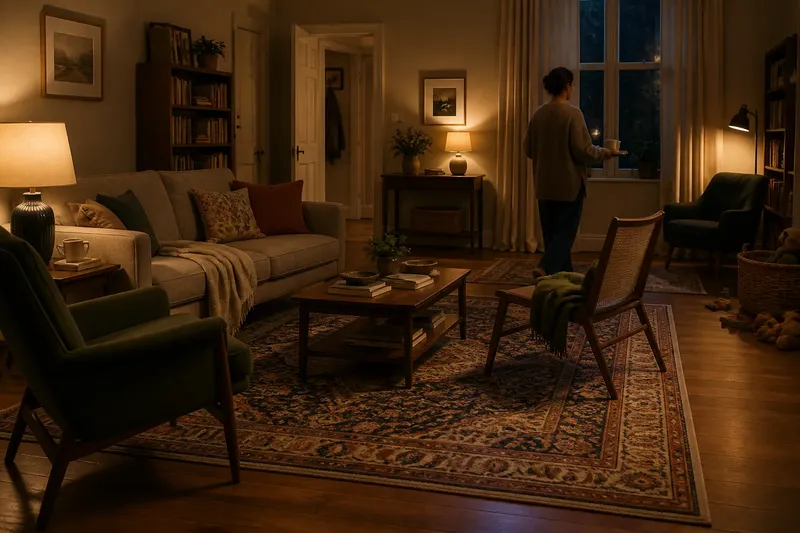
On Monday evening, someone carrying tea crosses the sitting room to reach the window, skirting a chair that has drifted into the route. The rug sits neatly beneath the coffee table, but the furniture around it feels scattered. Thoughtful rug placement can make a room within a room by grouping those pieces and marking where one activity gives way to another. It works best when it follows the paths people already take, rather than asking them to walk around the arrangement.
A week is enough time to notice those paths, try a layout and live with it through ordinary use. There is no need to begin by buying a new rug. Start with the room as it is, and let the way people move through it shape the change.
Monday shows where the room already works
For one evening, leave the furniture and rug where they are. Watch the room at the times it is used: when someone enters with shopping, when a child heads to the sofa, or when a lamp is switched on for reading. Notice which routes are repeated and which corners are used only occasionally.
Look for the path between doors, the line from a sofa to a side table, and any route towards a window or cupboard. A walking route is not always straight. Someone may naturally pass behind a chair rather than cross in front of it, especially when another person is sitting there.
Make a quick sketch on paper, marking doors, furniture and the paths people actually take. Add the rug’s outline as it sits now. This is not a decorating plan yet; it is a record of the room’s working pattern.
Keep the sketch simple enough to use while moving furniture.
Tuesday separates sitting places from walking routes
On Tuesday, mark the main walking lines on the sketch with a pencil. Then identify the furniture that belongs to the activity you want to define: perhaps a sofa, two chairs and a coffee table for conversation, or an armchair and a small table for reading. The rug can gather these pieces visually, making their shared use legible without adding a screen or another large object.
Consider the room’s entrances before choosing the rug’s position. A rug that straddles a route can make the boundary between sitting and passing through feel unclear. It may also leave a chair partly on and partly off the rug, where the chair shifts during use. The aim is not to put every leg in one exact arrangement; it is to make the group feel deliberate while keeping a clear way through.
Imagine a sitting room with a doorway at one end and a window at the other. The sofa and chairs face one another, but the usual route to the window passes behind the sofa. If the rug is pulled towards the window, the group may feel gathered while the route remains open; the observable result should be that people can cross without brushing the chairs. If that movement becomes awkward, reconsider the rug’s position.
Wednesday tests the rug against the furniture group
On Wednesday, use a folded blanket or sheets of newspaper to mark the approximate area the rug would occupy. Keep the outline inside the walking routes you mapped, then sit in the chairs and look at the grouping from the doorway. The temporary shape helps reveal whether it will anchor the furniture or simply sit in the middle of the floor.
Notice how the furniture meets the proposed edge. A rug can sit under the front legs of a sofa and chairs, or hold a smaller arrangement entirely on its surface. The first approach links furniture across a larger area; the second can make a compact reading corner feel distinct. A coffee table alone on a rug may look isolated if the seats remain well outside its edge.
Look at the group from several everyday viewpoints, not only from the sofa. The room should still make sense when someone enters, passes through or stands by the window. If the marked outline seems to divide a route, shift it before moving heavy furniture.
Use the floor marking to judge the group, not to dictate a perfect shape.
Thursday checks the edges underfoot
On Thursday, consider the rug itself as a surface people cross. Corners and edges need to sit flat, especially near a doorway or a chair that is regularly moved. A rug pad may help keep a rug in place, but its suitability depends on the floor finish and the rug. Check the rug and pad labels, and follow the relevant manufacturer’s instructions.
Notice whether doors clear the rug and whether chair legs catch its edge. A thick pile can feel pleasant beneath bare feet, yet may be less convenient where a door swings low or a chair is pulled back often. A flatter weave can be easier to cross, though its appearance and feel may suit the room differently.
Also consider how the boundary will read. A rug with a strong colour or pattern makes a change of use more visible. A quieter design can gather furniture without drawing much attention to the floor. Neither choice is inherently better; the room’s existing colours and the desired sense of separation matter.
Friday gives the layout an ordinary day
On Friday, put the rug in its proposed position and return the furniture to the marked group. Use the room normally rather than treating the arrangement as finished. Sit, stand, carry objects across it and open doors as usual. Observe whether the route remains natural and whether the seating feels connected.
Pay attention to small signs of friction. A chair may repeatedly be pushed over the edge, or someone may take a longer route around the group. A side table might be just beyond comfortable reach. These details matter because a layout that looks composed in a still room may behave differently once people move through it.
If something feels wrong, change one thing at a time. Move the rug slightly, then see what happens to the boundary and the path. If the furniture is the source of the problem, adjust the group rather than forcing the rug to solve every issue.
Saturday marks a change of use
A rug can signal that part of a room has a different purpose, even when that use is occasional. It might mark a place for reading beside a bookcase, a play area within a larger living room, or a compact spot for conversation near a fireplace. The clue comes from the relationship between the rug and the furniture or objects gathered on it, not from the rug alone.
On Saturday, consider whether the intended use has a clear centre. For reading, that might be a chair angled towards a lamp and a table within reach. For conversation, it might be seats that face one another. The rug’s edge gives those pieces a shared visual boundary, while an open strip of floor can preserve the route to the rest of the room.
Say you want a small reading place in a room that also serves as a passage to the garden. The invented starting point is an armchair beside a bookcase, with a lamp and side table nearby and a garden door beyond. You mark a rug area under the chair and table, keeping the route to the door outside it; then you sit in the chair and walk to the garden as usual. If the route stays open and the reading pieces feel grouped, that arrangement serves both uses; if the chair blocks the way, shift or rotate the group and check again before enlarging the rug area.
What should you check before settling the rug?
Before deciding, check the routes people use, the relationship between the rug and the furniture, and the edges where doors or moving chairs meet it. For each observation, choose a clear action: if a route crosses the rug awkwardly, shift the rug or furniture; if the seating feels disconnected, bring the group closer or extend the rug beneath more furniture; if an edge catches, reposition it and check the rug and pad instructions.
- Observe whether the route between doors stays clear; if people brush furniture or detour, move the rug or seating, then walk the route again.
- Observe whether the sofa and chairs feel like one group; if they seem scattered, place the rug beneath their front legs or bring the seats closer instead.
- Observe whether a chair leg catches the rug edge; if it does, shift the rug or chair, then pull the chair in and out again.
- Observe whether doors open without touching the rug; if they do not, move the rug clear of the swing or consider a flatter option.
- Observe whether rug corners and edges lie flat; if an edge lifts, reposition it and check the rug and pad labels before use.
- Observe whether the boundary makes the intended activity clear; if it does not, regroup the relevant furniture or choose a more distinct rug position.
Should every furniture leg sit on the rug?
No. A rug can connect a group by sitting beneath the front legs of several seats, or define a compact area with all its furniture on top. Choose the arrangement that joins the group without leaving legs awkwardly on the edge.
Can a rug divide a room without blocking a path?
Yes. Place its edge where the activity changes, while keeping regular routes clear around the group. The division can be visual rather than a physical barrier.
What if the room has an irregular shape?
Use the furniture and walking routes as your guides rather than trying to centre the rug in the whole room. A rug can anchor one useful cluster even if its outline does not match the walls.
How can a small rug make a group feel connected?
Keep the seats close enough to relate to one another, then let the rug sit beneath the front of the furniture or beneath a smaller central arrangement. The surrounding floor can remain visible and usable.
Sunday keeps what works and changes what does not
On Sunday, look back at the week’s notes and use the room at a busy time. Check whether the rug still groups the intended furniture, whether the change of use is clear, and whether the familiar paths remain easy to follow. If one answer is no, make a small adjustment and observe the room again before deciding the layout is settled.
Do not treat the rug as a fixed border that every activity must respect. A chair may move for a visitor, or a table may be pulled closer for a shared game. The useful boundary helps the room make sense without making ordinary movement feel constrained.
For a room-within-a-room effect, thoughtful rug placement should gather the pieces that belong together and leave the routes people need outside that group. Let the actual pathways guide the arrangement, even when the furniture shifts with the week.